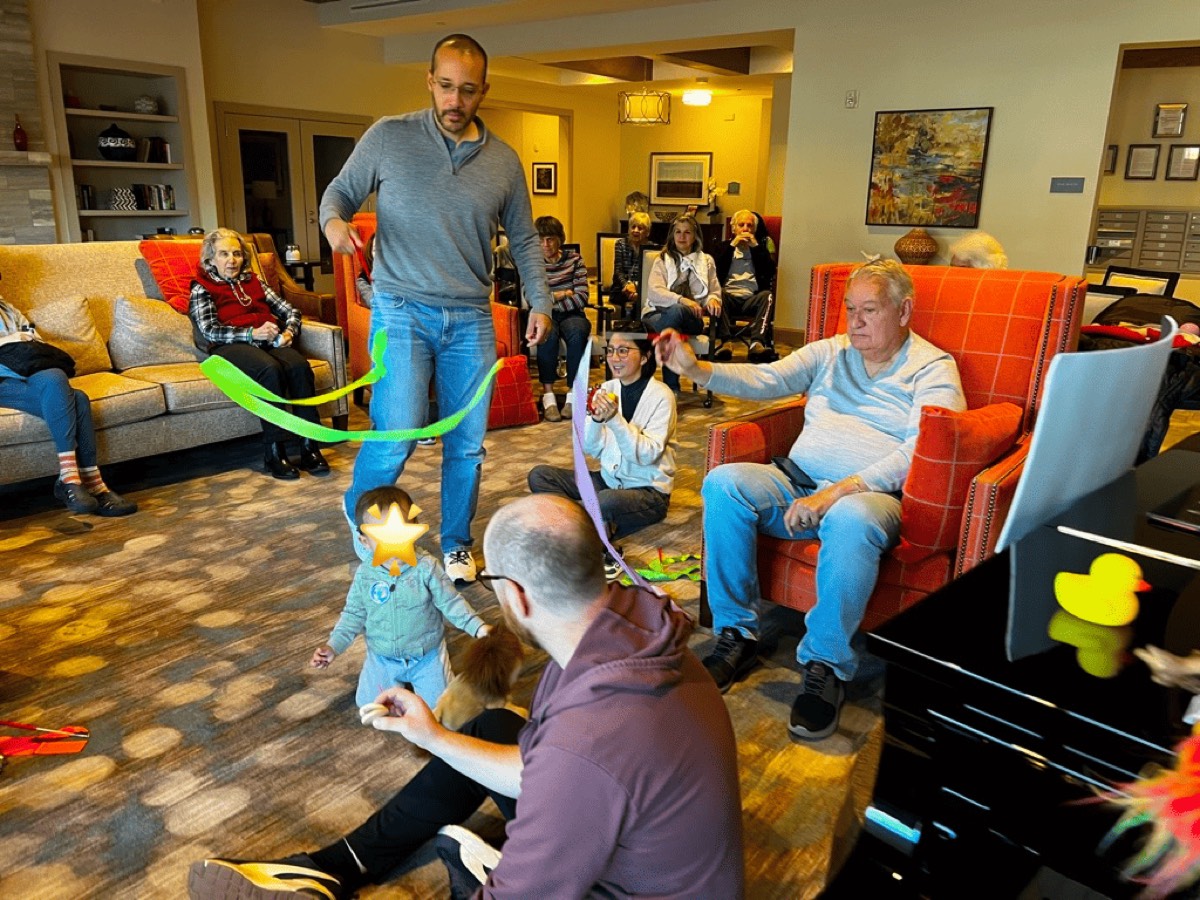
“Music wires your child’s brain.” You’ve heard the line. It’s true — rhythm supports attention and self-regulation, singing builds language and memory, and group music grows social skills.
But for me, the real headline is simpler: music wires the brain for joy.
Joy is a memory your child will seek out
If kids consistently connect music with laughter, play, and warm connection, the brain tags that experience as something to return to. Over time, “music = joy” becomes a durable association — the kind that nudges your child to choose music, again and again.
Try this: put on a song you love — not kids’ music — and let it show on your face. Sing along, dance, be a little silly. Your child learns that music is worth loving by watching you love it.
Yes, the neuroscience matters — but it’s not the point
- Rhythm & regulation: Keeping a beat practices starting/stopping — the same circuitry kids use to switch states and manage impulses.
- Language & memory: Singing pairs sound + words + breath, reinforcing phonological awareness and recall.
- Social syncing: Moving together in time increases a sense of belonging (we see this every week in class).
All great. Still, none of it sticks if the experience isn’t positive. Joy is the soil that growth takes root in.
How we build “joy first” in class
- Allegro → Largo flow: We start big and playful, then guide the room down to calm, relaxing Largo — no “shhh,” just a musical downshift. Try the same arc at home with the free Calm Dial.
- Direct, don’t suppress: During Allegro we cue “loud bangs!” on the cajón. In Largo it becomes “quiet bangs.” Kids feel included, not corrected.
- One simple idea, repeated: Toddlers thrive on repetition. Mastery feels good — and that feeling is what we’re after.
Stories that made this real for me
Dan at Dinner. A resident I usually see only in class lit up on Main Street when he recognized me: “It’s the best thing they’ve ever done here.” That’s joy wiring in action — for elders and kids.
The baby dancing. During Vivaldi, a ten-month-old started bouncing in rhythm — hips, arms, smile — not random movement but real dancing. That’s a brain chasing what feels good.
Under four? Prioritize the impression, not the skill
Before ~4–5 years old, music should be about positive experiences, not drills. Skills will come faster to a child who already believes music is a happy place to be.
Try this at home (2-minute routine)
- One song, one move: Pick a favorite track. Do “two claps, one stomp” the whole song. Kids love the lane.
- Anchor song: Choose one song for bath, one for bedtime — same every day. Music becomes a gentle signal for what’s next.
- High/low game: Reach tall for high notes, crouch low for low notes. Sound becomes space; learning becomes play.
If there’s one takeaway, it’s this: help your child’s brain associate music with joy. The rest — attention, language, confidence — grows far easier from there.
Want your kid to feel that “music = joy” in community? Try a 45-minute class inside a local retirement home — first class is free.