Music & Emotional Intelligence (for Little Ones)
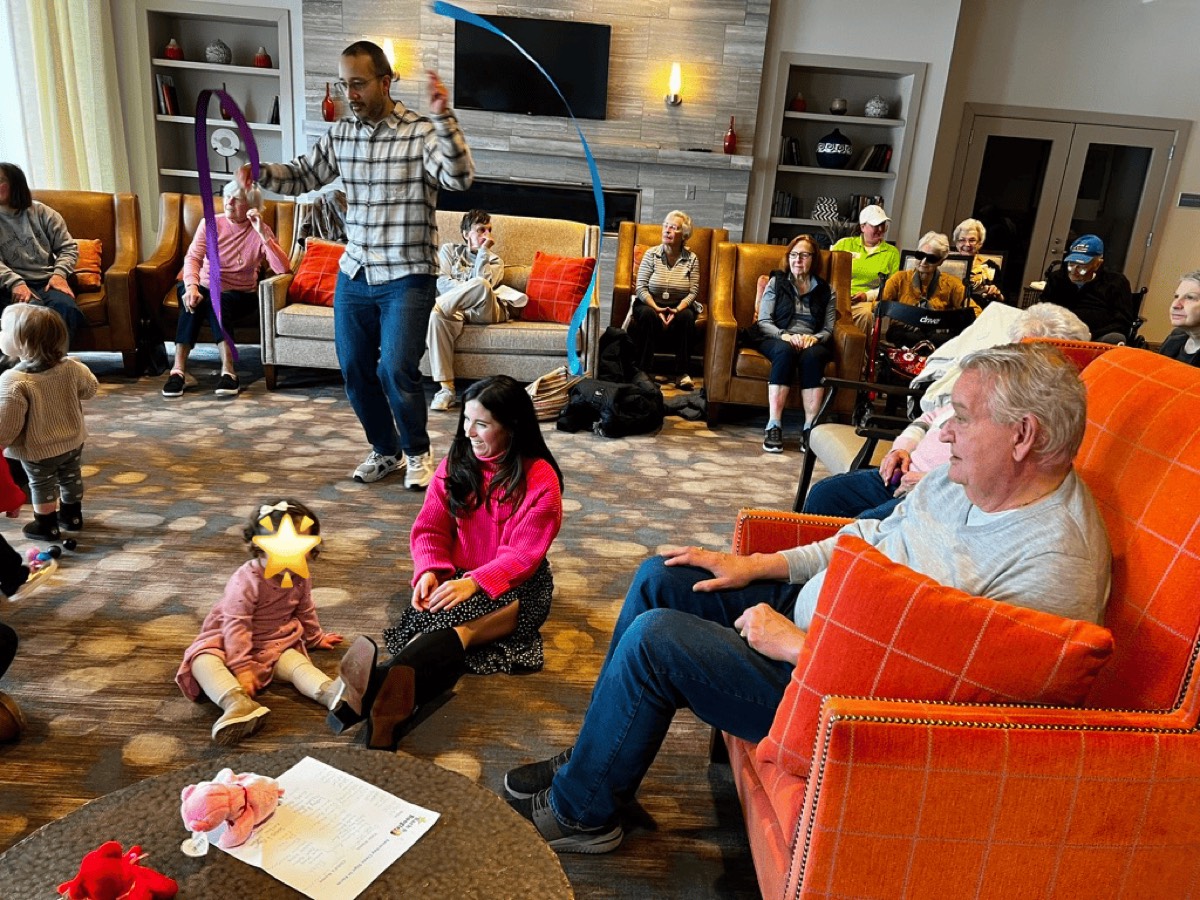
Music is one of the simplest ways to practice feelings. Without a single lecture, little ones start to notice: fast feels exciting, slow feels calm, major feels happy, minor feels sad. A toddler doesn’t need theory—they need impressions. When we make music together, they’re quietly rehearsing empathy, self-control, and connection.
What emotional intelligence means at age 0–4
“Emotional intelligence” can sound like a big, adult skillset. For toddlers, it’s really three things:
- Emotion knowledge — noticing and naming feelings.
- Co-regulation — borrowing our calm until they can steady themselves.
- Self-regulation — the beginnings of impulse control.
Researchers at Harvard’s Center on the Developing Child and ZERO TO THREE describe this as a progression: kids lean on us first, then slowly internalize those skills. Music happens to be a beautiful way to scaffold that process.
Why music is such a good practice ground
Rhythm → Regulation
Infants’ sense of rhythm is shaped by movement. Bounce them to the beat and their brains literally line up with it (Phillips-Silver & Trainor, 2005). That’s why we use rhythm changes—Allegro to Largo—to help children “shift gears” on purpose.
Tempo & Mode → Emotion recognition
By preschool, kids reliably read tempo and mode: upbeat = happy, slow/minor = sad (Dalla Bella et al., 2001). These contrasts are fun games, but they’re also early empathy exercises.
Synchrony → Empathy
When we clap or sway together, something deeper happens. A famous study found that 4-year-olds who made music in sync were more likely to help and cooperate afterwards (Kirschner & Tomasello, 2010). Synchrony builds trust, even at three feet tall.
Participation & Singing
Six months of active parent-infant music classes boosted social and communicative development compared to passive listening (Gerry, Unrau & Trainor, 2012). In other words, singing and moving together matters more than just having music on. Group singing has also been linked to better postnatal mood and stronger parent-baby bonds (Fancourt & Perkins, 2018). A lullaby isn’t “extra”—it’s emotional glue.
The Bach & Boogie arc: Allegro → Largo → Vivace → Boogie!
Every week we travel the same musical path: happy, calm, fast, dance. That predictability is a gift. Toddlers begin to anticipate the calm after the excitement, the wild dance at the end. It’s a rehearsal for real life: energy goes up, energy comes down.
Games that grow emotional intelligence
- Happy vs. Sad: play a major chord and smile; play a minor chord and frown. Kids mirror instantly. (Emotion knowledge)
- Volume Hands: stretch arms wide for loud, pinch fingers for soft. Switching back and forth is inhibition control in disguise.
- Tall Trees / Tiny Mice: reach high for high notes, crouch low for low. It anchors sound to space and body.
- Together Beat: drumming in sync isn’t just fun—it strengthens cooperation.
- Freeze & Breathe: when the music slows, hand on belly, notice the breath. That’s co-regulation turned into play.
Intergenerational magic
Why hold these classes inside senior living homes? Because the connection runs both ways. Reviews of intergenerational music programs show residents gain joy, purpose, and social health (BMC Geriatrics, 2020). Children, meanwhile, practice empathy across ages (Generations United, 2018).
We’re not performing for elders. We’re sharing a room, a rhythm, and eye contact. That’s the magic.
What’s not true (the Mozart myth)
No, listening to Mozart won’t make your baby smarter. Decades of research show the so-called “Mozart effect” was a short-term arousal bump, not an IQ booster (Pietschnig et al., 2010 meta-analysis). What does matter: consistent, joyful, interactive music.
Try it tonight (60 seconds)
- Sing one lullaby, whisper-voice.
- Place your hand on your toddler’s belly, breathe together.
That’s emotional intelligence training—gentle, musical, relational.
Closing thought
At Bach & Boogie, we keep it simple: one tiny musical idea each week, repeated with joy. Because simplicity plus repetition plus community = deep learning. Emotional intelligence isn’t taught in a lecture—it’s felt, practiced, and shared.
Want to practice this together? Join a class →