Classical Music for Toddlers? Yes — Here’s Why
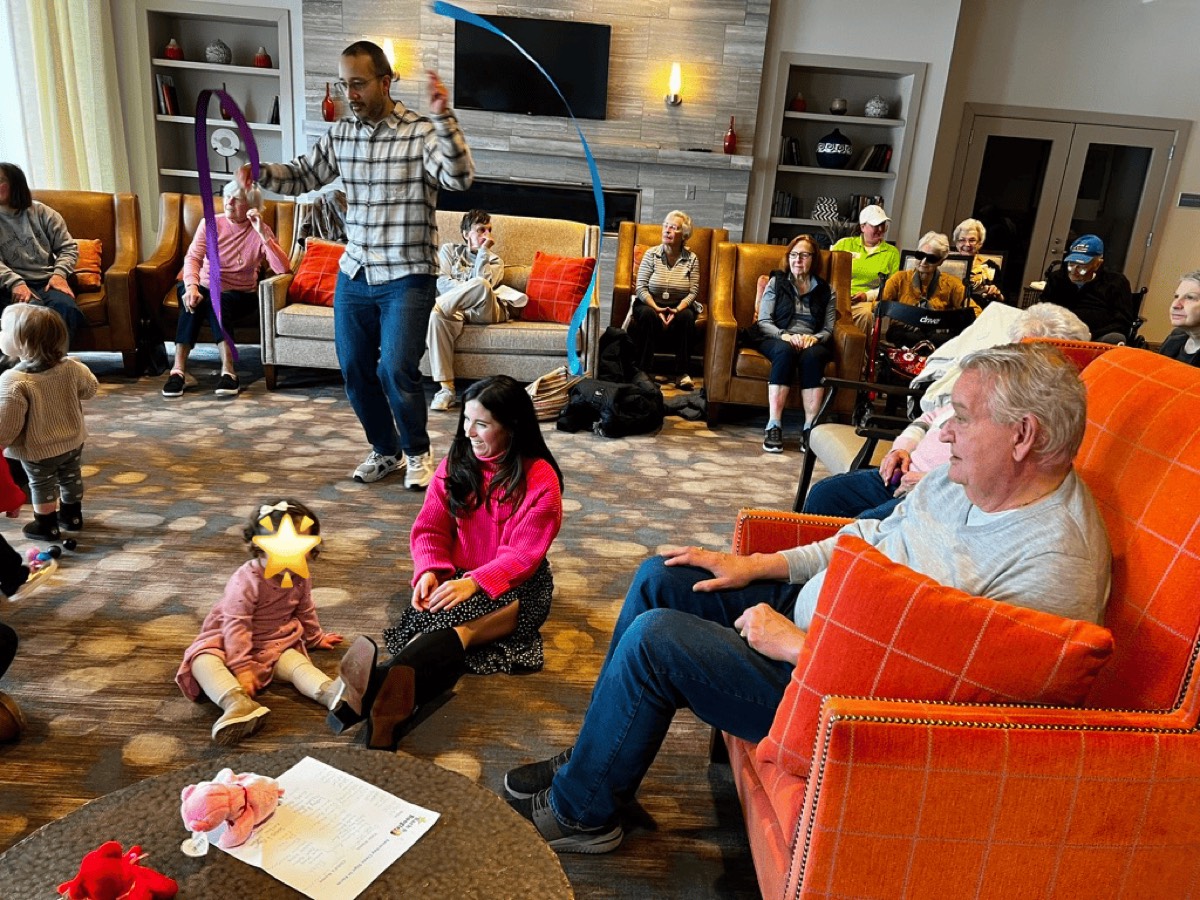
Classical isn’t “serious” — it’s contrast. Fast vs. slow, loud vs. soft, high vs. low. Toddlers learn through contrast, and classical hands it to them in big, beautiful shapes.
Why classical works for little ones
- Tempo teaches feeling. Young children read tempo before they read mode: fast often feels “happy,” slow often feels “sad.” That’s a perfect, low-pressure way to practice noticing emotions (Dalla Bella et al., 2001).
- Movement wires rhythm. Bouncing, swaying, marching — how the body moves shapes how infants hear the beat (Phillips-Silver & Trainor, 2005).
- Simple beauty lands early. Even very young babies show preference for certain consonant combinations and for the warmth of a parent’s singing voice (Trainor & Heinmiller, 2002; Trainor & Trehub).
Timeless meets brand-new
Elders light up at music they’ve known for decades; toddlers hear it brand-new. That overlap creates instant connection in our intergenerational classes. Familiar music is famous for evoking vivid autobiographical memories — even when other kinds of memory are fragile (Cuddy et al., 2015).
Try these at home
- Bach — pattern play: Short dances from the Partitas or an Invention. Clap a repeating pattern (clap-clap-tap) while you listen. Ask, “Where did it repeat?”
- Vivaldi — up then down: Start with an Allegro from The Four Seasons for joyful movement, then switch to a Largo to feel your bodies slow together.
- Debussy — water pictures: Try an easy, dreamy piece like Arabesque No. 1 or “The Little Shepherd” from Children’s Corner. Sway or draw “water lines” in the air.
Contrast games
- Fast/slow switch: When the music speeds up, march; when it slows, tiptoe. Name the change out loud.
- Loud/soft hands: Big arms for loud, tiny fingers for soft — follow the music’s dynamics.
- High/low shapes: Reach tall for high notes, crouch low for low ones. Sound becomes space.
Tip: Keep it short (90 seconds is plenty), keep the volume friendly, and repeat favorites. Toddlers learn by returning to the same patterns again.
Why this fits our classes
We use classical because it gives clear, playful contrasts and invites real listening. It’s musical, not moralistic — no lectures, no “be still.” Just shared rhythm, shared attention, and room to move.
Want a weekly space to practice this? Join a class →